

AI avatar: cast yourself in any film
How to turn one selfie into a reference set (a casting headshot, three character sheets and a voice sample) that puts the same you in a western, a cockpit or an ad. The prompts, the checks, and a playbook your own AI can run.
The clip above is a generated video. The man in it was cast from a selfie, a full-length photo and twenty seconds of his voice.
You build the reference set once: a casting headshot, three character sheets and a voice file. After that, every render refers back to those images instead of a description of a face, so the same person shows up in every genre.
The casting headshot
Start with a selfie, square to the camera, in even light. Feed it into ChatGPT image generation with this prompt.
Create a photorealistic studio casting headshot of the man in the attached selfie. Use the selfie for his identity, not his pose or camera angle. POSE IS ESSENTIAL: His chest, shoulders, neck, and face must all face directly forward, square to the camera. Both shoulders are equally distant from the lens and level, with equal amounts visible on either side. His nose, chin, and the center of his chest align vertically at the center of the frame. No torso rotation, three-quarter pose, head turn, head tilt, or leaning. Preserve natural facial asymmetry. Camera directly in front of him at eye level. Frame from the upper chest upward, with his entire head visible and a little headroom. Direct eye contact, relaxed shoulders, and a calm, confident expression with his mouth closed. Preserve his recognizable likeness: facial proportions, eyes, nose, mouth, high forehead, receding buzz cut, and short salt-and-pepper stubble. Keep his actual age, pores, and fine lines. Lean, naturally athletic build with modest shoulder width. No oversized shoulders, bulky chest, thick neck, or exaggerated jawline. Simple charcoal knit crewneck with a natural fit. Plain muted gray studio background. Soft directional lighting with gentle shadows, crisp eyes, and natural color. Authentic actor's casting photography with an 85mm portrait lens. Remove the selfie background and necklace. No beauty filters, skin smoothing, de-aging, or changes that make him look like a different person. Single portrait, vertical 4:5. No text or border.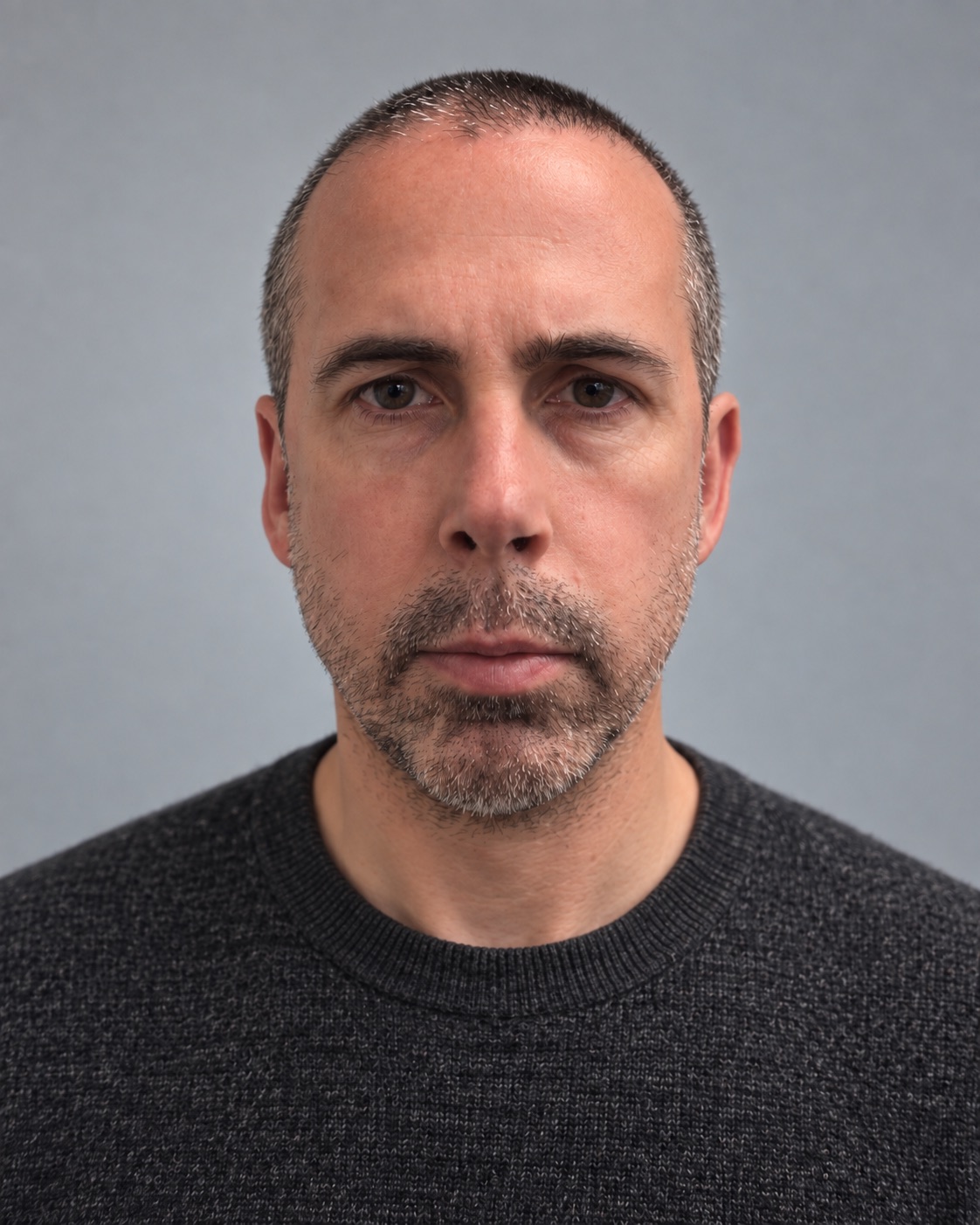
Rewrite the likeness clause for your own face. “High forehead, receding buzz cut, and short salt-and-pepper stubble” describes the man in these examples. Replace it with your hair, facial hair and any distinguishing marks. The playbook at the top of this page does that step for you by looking at your selfie.
Most of the prompt is spent on the pose. A headshot turned a few degrees bakes that turn into every sheet made from it, so the prompt spells out level shoulders and a centred chin rather than saying “facing forward” once.
The last clauses guard the likeness. Image models smooth skin, take years off and broaden shoulders unless told not to, and each of those makes the result look like a different person.
The head-and-shoulders sheet
Use the headshot as the input and ask for three named angles, in 16:9.
Make a character sheet of this man from Image1 with three equal panels of him looking to the left, straight ahead, and to the right on a plain light grey background. Make it a closeup from the neck and shoulders up. Use the face and identity of the man in Image1 with a plain grey sweatshirt.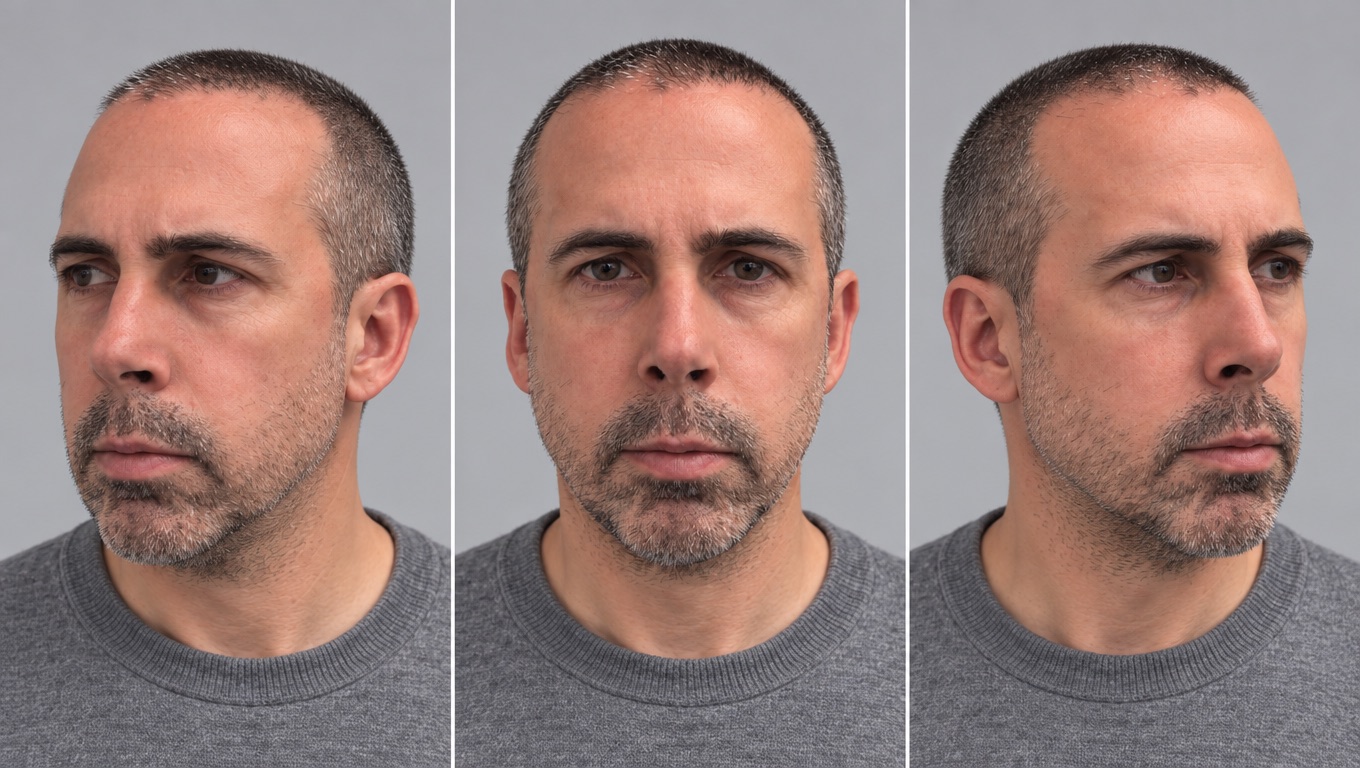
Name all three directions. A sheet that asks for “a turn” without naming them can return two panels a few degrees apart, and that gives a video model nothing to work from when the head turns.
The full-body sheet
Use the head-and-shoulders sheet as Image1 and a full-length photo of yourself as Image2. The
photo carries height and build only, so the light and background do not matter.
Make a character sheet of this man from Image1 with five equal panels on a plain light grey background, showing his full figure head to foot, standing upright and relaxed with his arms at his sides, feet a little apart, weight even. The five panels are, from left to right: full left profile, three-quarter left, straight ahead facing the camera, three-quarter right, and full right profile. Use the face and identity of the man in Image1. Dress him in a plain mid-grey short-sleeved crew-neck shirt and plain mid-grey sweatpants, barefoot. The shirt and sweatpants are the same cut, colour and finish in every panel, and his build and proportions are identical in every panel. Even soft studio lighting across the whole figure in every panel, so his shoulders, chest depth, waist, limbs and posture read clearly from head to feet. He is calm and neutral, standing still. Plain light grey background with nothing else in the frame.

He is 6'0" and athletic. Use Image2 for height and body type and proportions.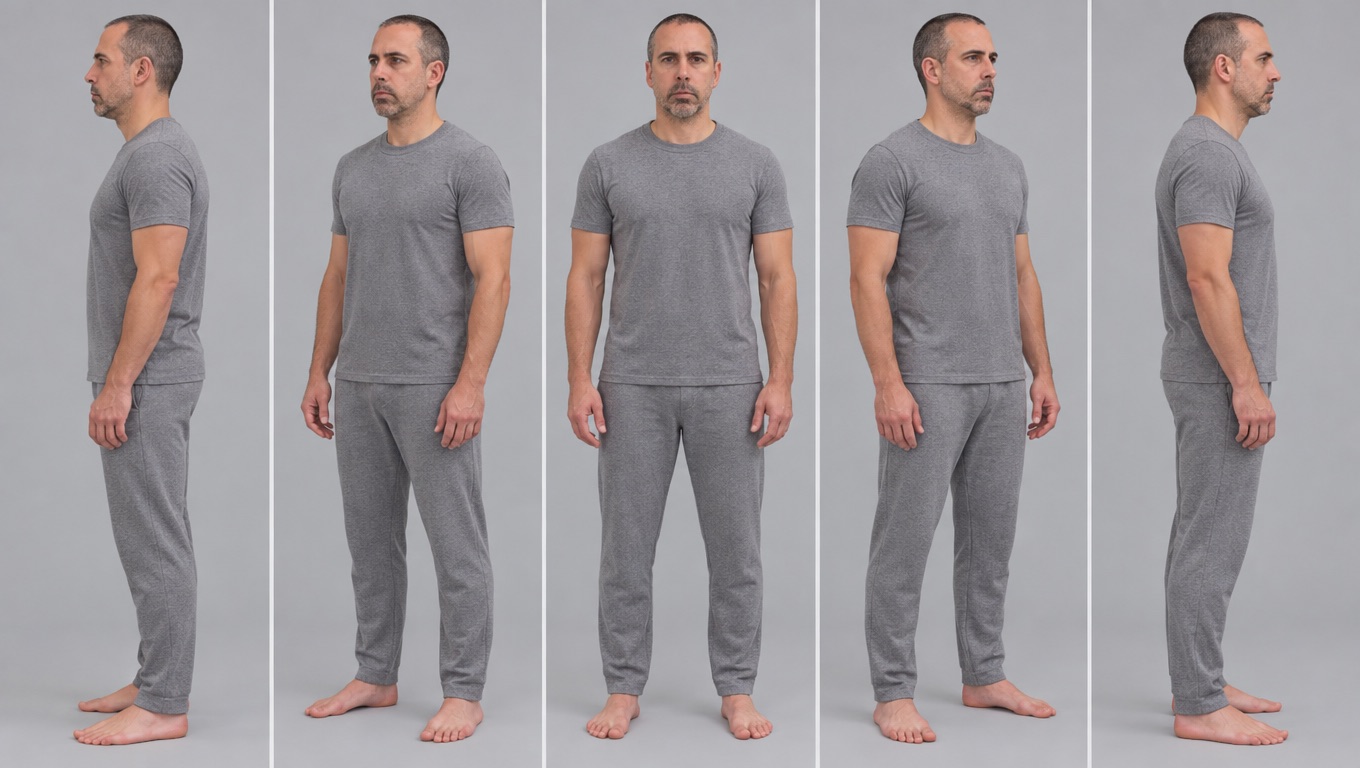
Check the build against the photo. Image models make people taller and more muscular than they are. If the sheet comes back broader than you, say so in the prompt and run it again.
The grey clothes are deliberate. Plain clothing shows the body’s shape clearly, and every wardrobe change later starts from this sheet.
The waist-up sheet
Use both sheets as inputs: the head-and-shoulders sheet for the face, the full-body sheet for the build.
Make a character sheet of this man with three equal panels of him looking to the left, straight ahead, and to the right on a plain light grey background. Frame him from the waist up, standing upright and relaxed with his arms at his sides. Use the face and identity of the man in Image1. Use his build, proportions and posture from Image2. Dress him in a plain mid-grey short-sleeved crew-neck shirt, the same cut, colour and finish in every panel. Even soft studio lighting across the whole figure, so his shoulders, chest, arms and posture read clearly. He is calm and neutral, standing still. Plain light grey background with nothing else in the frame.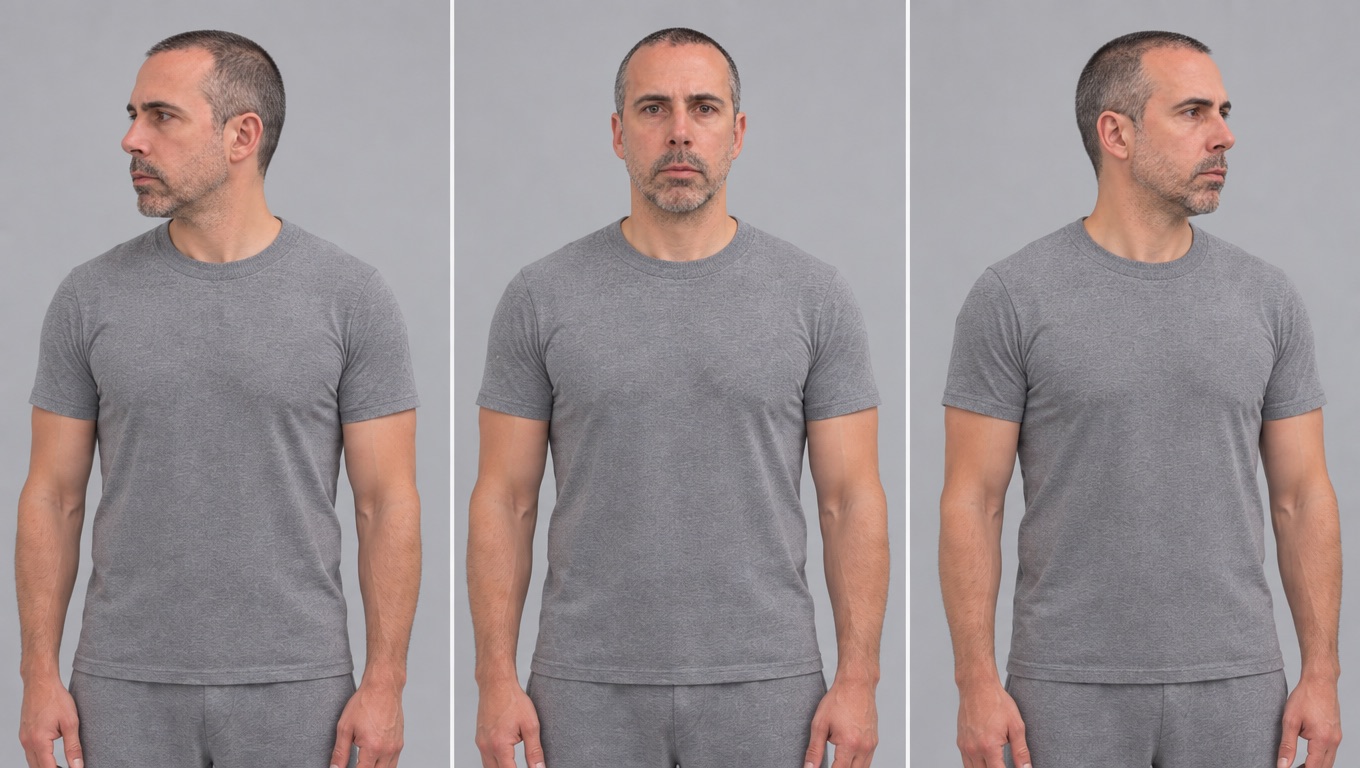
The voice
Record yourself reading this passage in your normal voice, in a quiet room. It is called “Please Call Stella” and contains nearly every sound in spoken English, so twenty seconds gives a video model a full sample of your voice.
Please call Stella. Ask her to bring these things with her from the store: six spoons of fresh snow peas, five thick slabs of blue cheese, and maybe a snack for her brother Bob. We also need a small plastic snake and a big toy frog for the kids. She can scoop these things into three red bags, and we will go meet her Wednesday at the train station.Save it as voice.wav. A phone voice memo is good enough.
Wardrobe
Use the full-body sheet as the input for every outfit. The sheet carries your identity, so the wardrobe prompts can be short. Each one returns the same five panels in new clothes.
Western
Put this man in a cowboy outfit (not jeans, a real cowboy from the Wild West) for a western.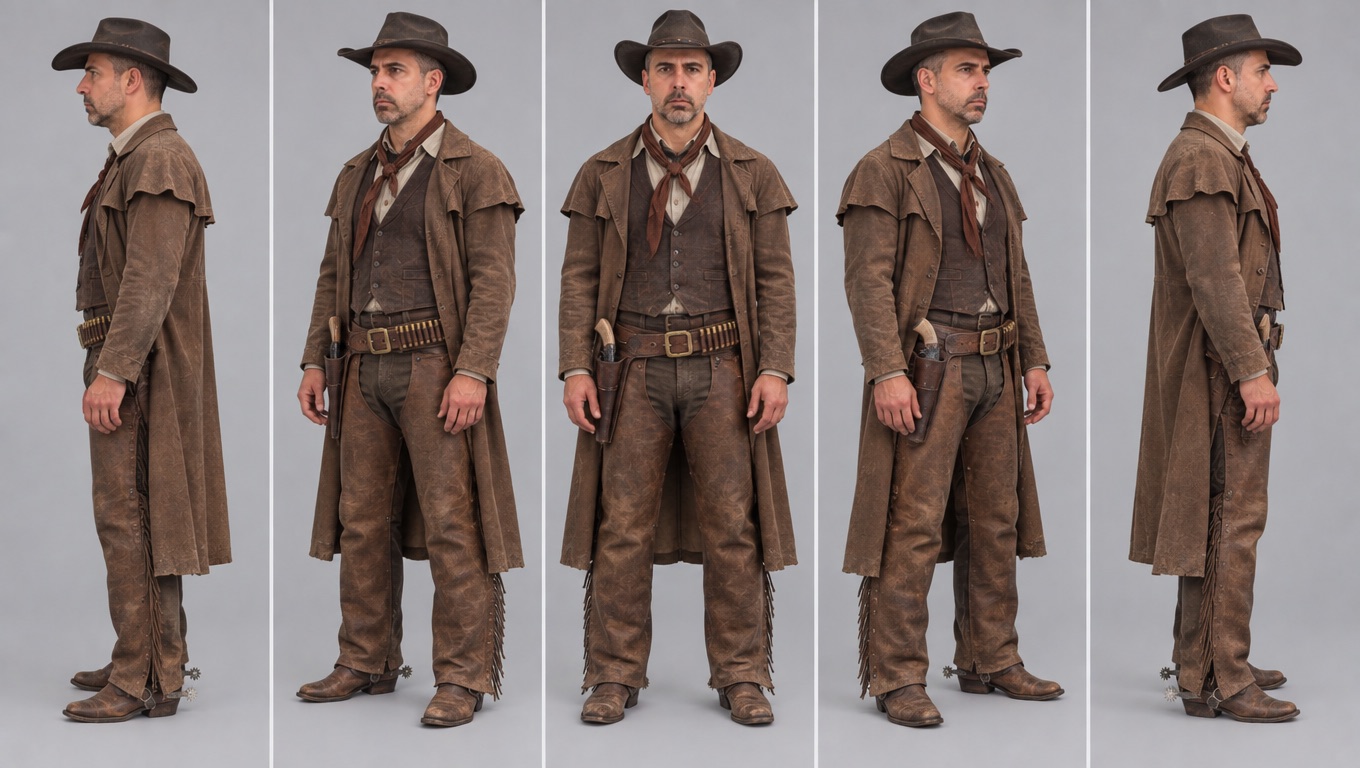
Name what you do not want. The prompt says “not jeans” to rule out the modern rodeo version of a cowboy and get the 1860s one.
Sci-fi
Put this man in a cool outfit for a sci-fi movie.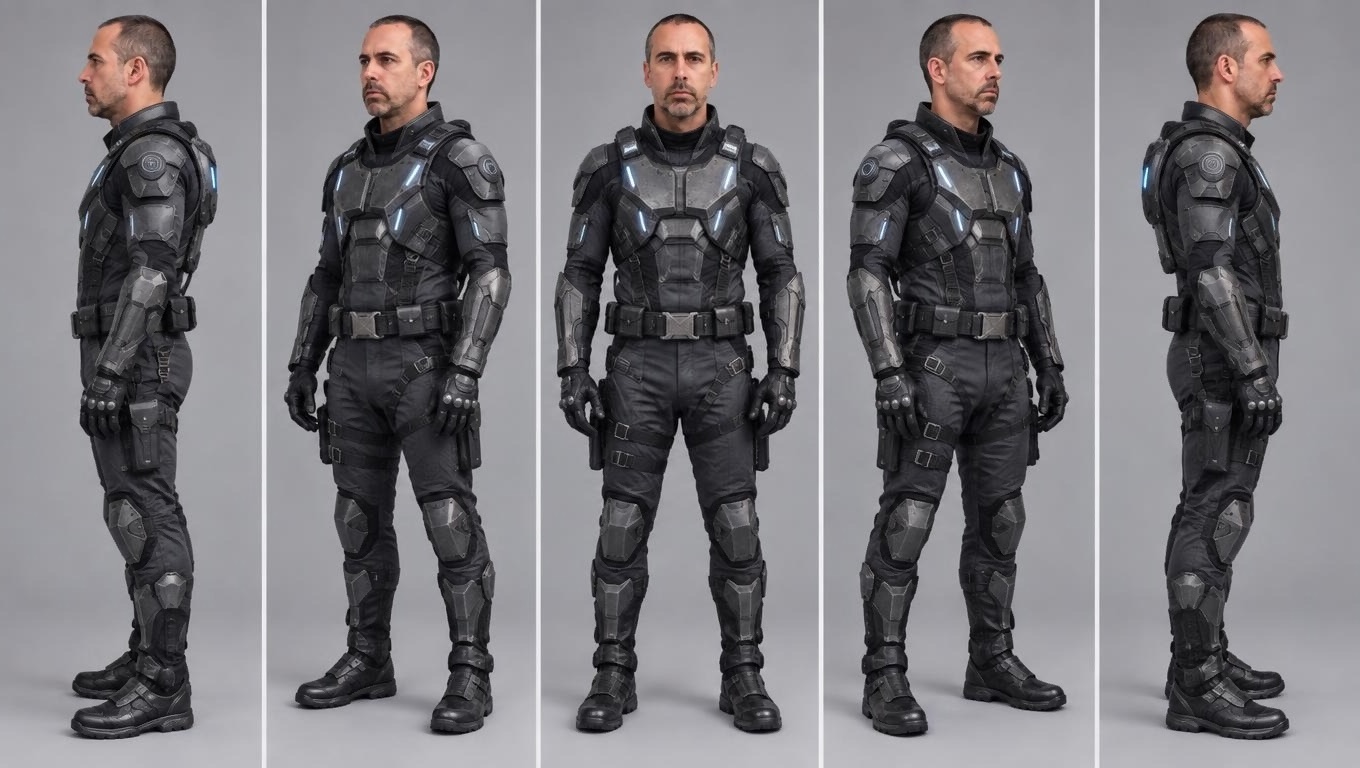
A genre word with no other direction still returns a usable outfit. Run it several times and keep the one you like, because each run returns a different look.
Boxing
Put this man in a real boxer's outfit for a classic boxing movie: satin robe with the hood down, taped hands, laced gloves, high-waisted trunks, boxing boots. Color scheme is Knicks blue and orange.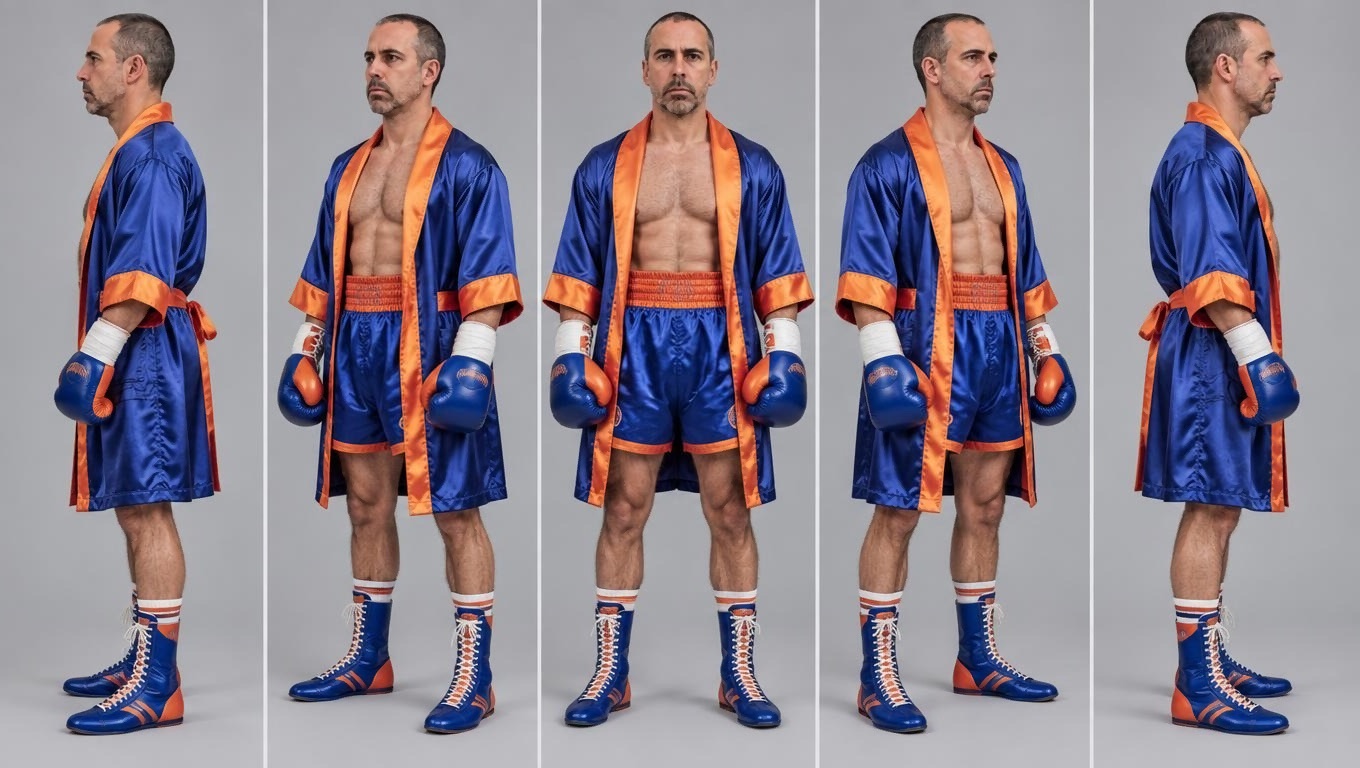
A colour reference does the matching for you. “Knicks blue and orange” names two colours, and the model carried the same split across the robe, trunks, gloves, boots and socks in all five panels.
Suit
Put this man in an expensive suit for a Wall Street drama.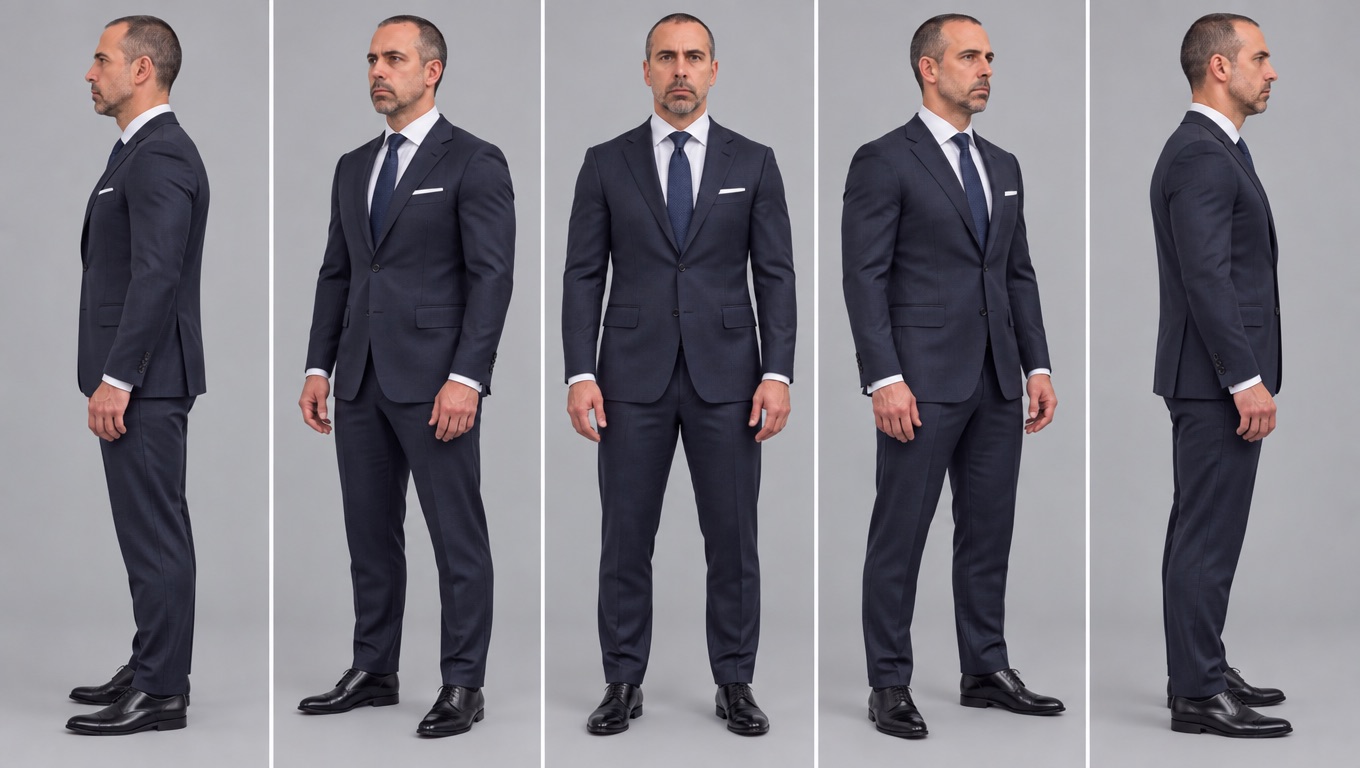
This prompt names no period, so it returns a modern slim suit. That suit is right for a present-day office and wrong for 1987.
1970s suit
Put this man in a 1970s game show contestant outfit: brown plaid sport coat, wide-collar shirt, name tag on the lapel.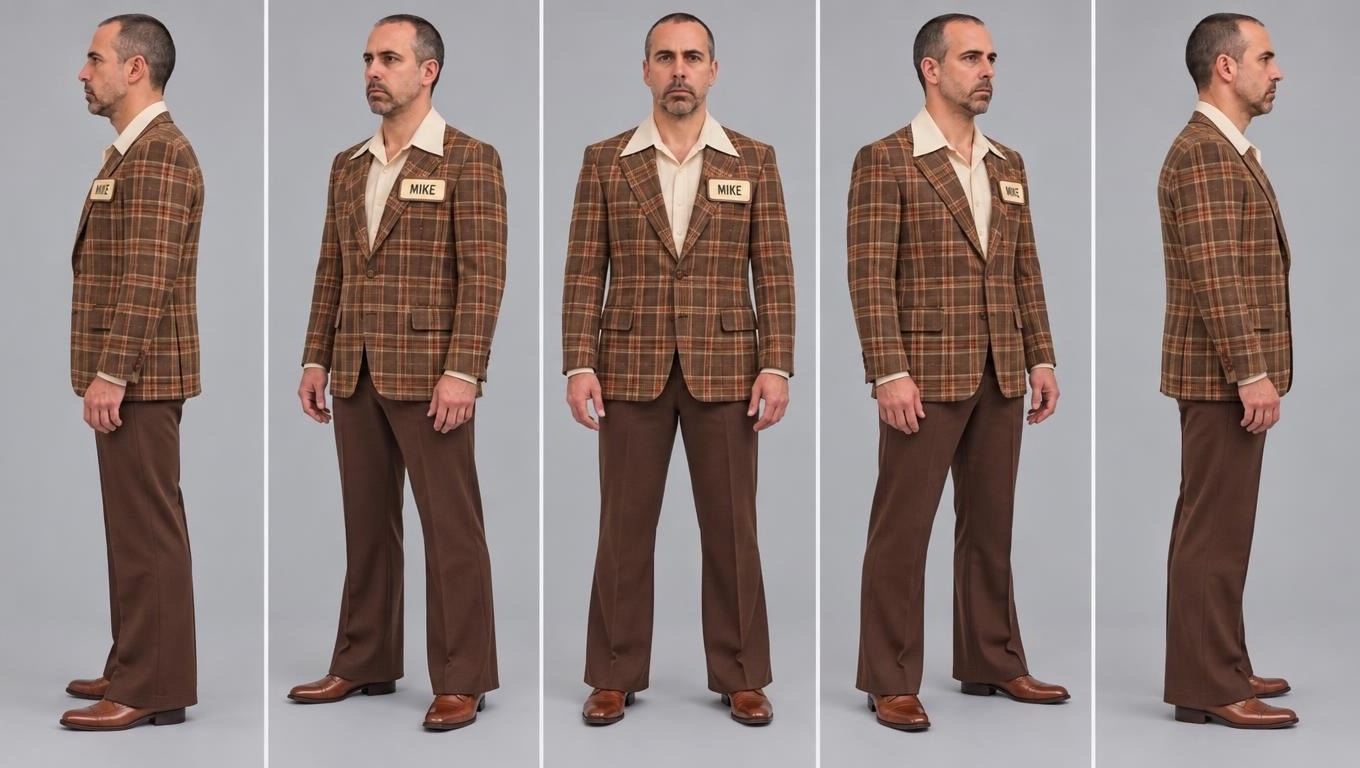
Put the period in the wardrobe prompt. The prompt names the decade and three items, and the model supplied the rest of the period: the collar worn over the lapels, the flared trousers and the heeled shoes. Asking for the 1970s only in the video prompt leaves a modern suit in a 1970s room.
The render
Give the video model every sheet and the voice file, and keep the scene description plain. This is the prompt behind the clip at the top of the page, run in Seedance.
Intense action western featuring man in outfit from Image4.

The man is the same man in Image1 and Image2 and Image3 and Image4.

His voice is Audio1.

Epic western. Crazy fight in a western town circa 1860. The man fights many outlaws. At some point he stops, looks around and says "I forget who I'm even mad at." Then keeps fighting.

IMPORTANT: NO MUSIC and NO SCORE. Only location sound and effects.
Image1 to Image3 are the three grey sheets and Image4 is the western wardrobe sheet. The
second line says the four images are one man, because otherwise the model can read them as four
people.
Keep the “NO MUSIC” line. Video models add a score by default, and a score baked into the render cannot be taken out in the edit.
Render the same prompt more than once. One prompt run twice returns two different fights, and the voice changes between renders too. Choose the take, then move on.